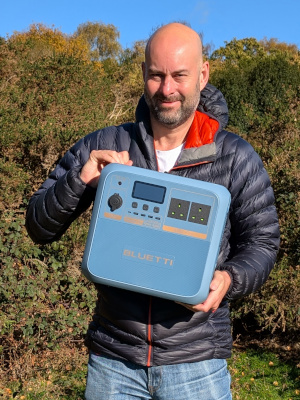
Bluetti Pioneer Na Review – The World’s First Sodium-Ion Power Pack For The Home

​Introduction: The Salt Revolution Arrives

​For the better part of a decade, the portable power industry has been locked in a singular race: the quest for lithium dominance. From pocket-sized power banks to massive home backup systems, Lithium-Ion (Li-ion) and Lithium Iron Phosphate (LiFePO4) chemistries have reigned supreme. They are energy-dense, lightweight, and efficient – pretty much perfect eh? However, they possess a small “Achilles Heel” which has plagued outdoor enthusiasts and off-grid dwellers alike: vulnerability to extreme cold and the reliance on scarce, expensive raw materials.

​Enter the Bluetti Pioneer Na.

​Marketed as the world’s first mass-produced sodium-ion portable power station, the Pioneer Na (named the NA300) represents a fundamental shift in energy storage technology. It doesn’t just offer a new battery; it offers a new chemistry. By swapping lithium for sodium—one of the most abundant elements on Earth—Bluetti promises a power station that is cheaper, safer, and, most crucially, capable of operating in freezing temperatures that would turn a standard lithium battery into a dormant brick.

​In this extensive review, the Camping Secrets crew dissect the Bluetti Pioneer Na to see if it lives up to the hype. Is sodium-ion the future of renewable energy, or is the weight penalty of this first-generation technology too high a price to pay?

Use code BLUETTIMarc for an extra 5% discount at the official Bluetti UK website

​The Tech Spec Sheet: What’s Under the Hood?

Before diving into performance, let’s look at the raw numbers that define the Bluetti Pioneer Na.

  • ​Battery Chemistry: Sodium-ion (Na-ion)
  • ​Capacity: 900Wh
  • ​​AC Output: 1,500W (Pure Sine Wave)
  • ​​Surge Power: 2,250W (via “Power Lifting” mode for resistive loads)
  • ​​Lifecycle: 4,000+ cycles to 80% capacity
  • ​​Weight: ~16 kg (35.3 lbs)
  • ​​Charging Temperature: -15°C to 40°C (-5°F to 104°F)
  • ​​Discharging Temperature: -25°C to 40°C (-13°F to 104°F)
  • ​​AC Charging Time: 0-80% in roughly 35 minutes (Dual Input: AC + Solar)

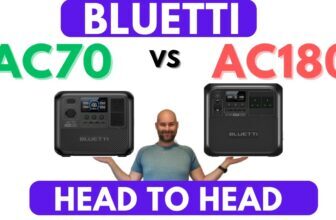
​​At first glance, the 900Wh capacity might seem modest for a unit weighing 16kg. For comparison, a lithium-based Bluetti AC180 offers 1,152Wh at roughly the same weight (or slightly lighter). This immediately highlights the primary trade-off of sodium-ion: energy density. Sodium ions are larger and heavier than lithium ions, meaning you get less power per pound. However, looking at capacity alone misses the point of this machine entirely.

Design and Build Quality

​Bluetti has maintained its industrial-chic aesthetic with the Bluetti Pioneer Na. The unit sports a distinctive cool-blue colour scheme, likely chosen to differentiate the sodium line from the standard grey/black of their lithium products. The casing is constructed from fire-retardant ABS and polycarbonate, feeling robust and “chunkier” than its predecessors.

The interface is dominated by a crisp LCD screen that provides real-time telemetry: input/output wattage, remaining runtime, and battery percentage. The buttons are tactile and large enough to be operated while wearing thick winter gloves—a subtle but essential design choice for a device pitched at cold-weather users.
​Port Layout:

  • AC Outlets: 2x 230V pure sine wave outlets.
  • ​USB: A generous array of 4 x USB-A ports and a 100W USB-C PD port, capable of charging high-performance laptops directly.
  • ​DC Output: A standard 12V/10A car socket (“cigarette lighter” style) and DC5521 outputs.
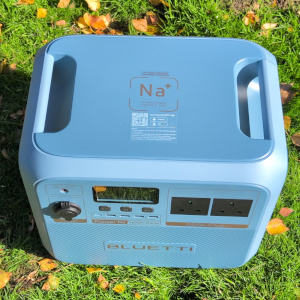
  • Wireless Charging: A 15W charging pad on top, a convenient staple of modern Bluetti units.
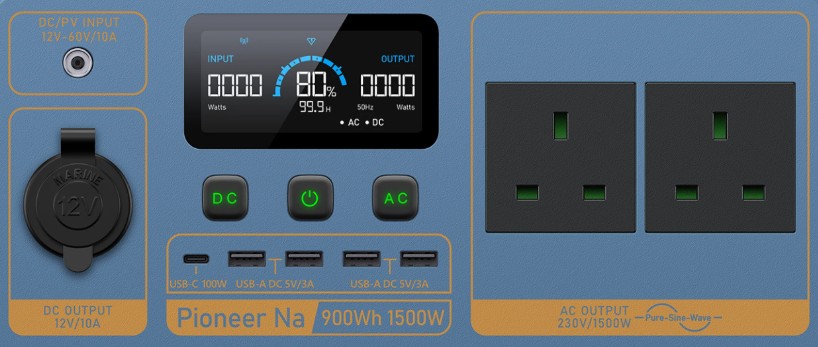
 

the front control panel of the Bluetti Pioneer Na showing all the input and output ports and power displays

Bluetti Pioneer Na Control Panel & Power Display
Bluetti Pioneer Na

Use code BLUETTIMarc for an extra 5% discount at the official Bluetti UK website

​The Game Changer: Cold Weather Performance

​The headline feature of the Pioneer Na is its defiance of winter.

​Standard Lithium-ion batteries are temperamental beasts. When the temperature drops below freezing (0°C / 32°F), the electrolyte within a lithium cell becomes sluggish. Trying to charge a lithium battery in these conditions can cause “lithium plating,” which permanently damages the cell and poses a safety risk. Consequently, most Battery Management Systems (BMS) in lithium power stations will simply shut down input at freezing temperatures.

​The Pioneer Na changes the rules. Thanks to the thermal stability of sodium-ion chemistry, this unit can:

    1. Discharge at -25°C (-13°F): It retains over 80% of its capacity even in deep freeze conditions.
    2. ​Charge at -15°C (5°F): This is revolutionary for winter campers, working outdoors, or emergency responders. You can leave solar panels connected in sub-zero weather, and the unit will actually store that energy rather than rejecting it.

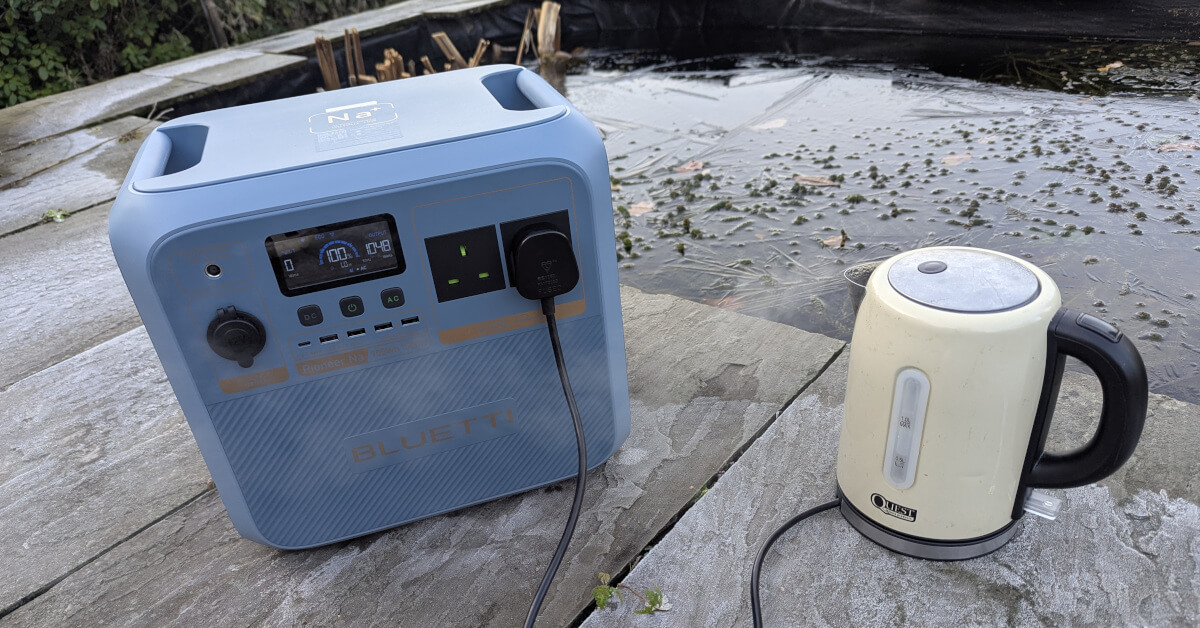
​In real-world UK Winter testing, while a standard LFP (Lithium Iron Phosphate) power station sat dormant in a snowy back garden, we demonstrated that the Pioneer Na continued to run a 240V electric blanket and charge a smartphone without hesitation. For anyone living in high latitudes or regions prone to blizzards (where power outages are most dangerous), this feature alone justifies the purchase.

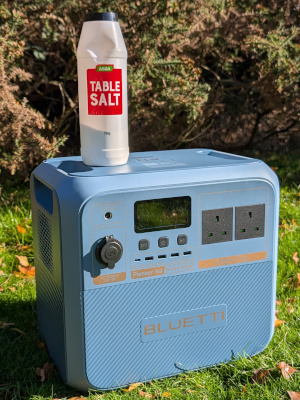
the Bluetti Pioneer Na power station sitting on the grass with full view of its front control panel
Front Control Panel
the Bluetti Pioneer Na power station sitting on the grass with full view of its top charging panel
15W Charging Pad

Performance: Output and “Power Lifting”

​With a rated output of 1,500W, the Pioneer Na is a mid-range contender. It comfortably handles 90% of household appliances. In our tests, it powered:

    • ​A full-sized refrigerator (compressor spikes handled easily).
    • ​A coffee maker (1,000W).
    • ​Power tools (drills, circular saws).

​The Power Lifting Mode:

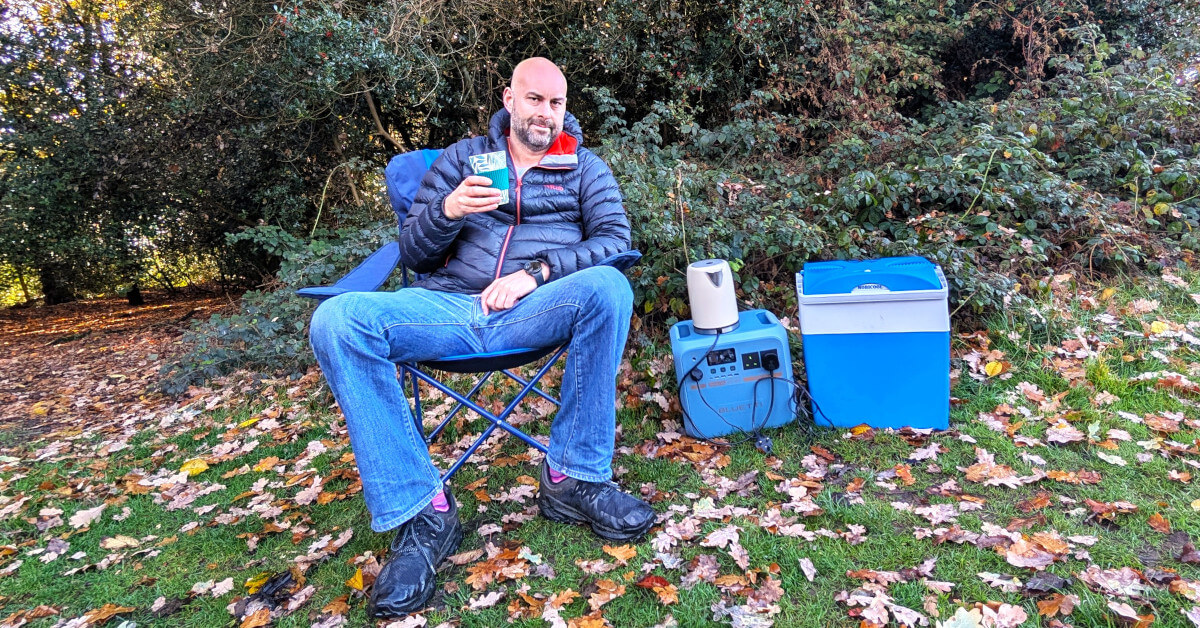
Bluetti has included their “Power Lifting” technology, which allows the inverter to handle resistive loads rated at up to 2,250W by adjusting the voltage. This doesn’t mean you can run a sensitive 2,000W laser printer, but simple heating elements—like a heavy-duty travel kettle or a space heater—will work, albeit not at maximum power. This is particularly useful in the cold-weather scenarios the device is built for; being able to run a space heater in a freezing cabin is a critical capability.

Bluetti Pioneer Na

Use code BLUETTIMarc for an extra 5% discount at the official Bluetti UK website

​Charging Speeds: The Sodium Advantage

the Bluetti Pioneer Na power station sitting on the grass with a tub of table salt sitting on top

Sodium-ion batteries are known for their rapid ion transport capabilities, often exceeding lithium in charging speed relative to stress.

​The Pioneer Na supports dual charging (AC + Solar).

    • ​AC Wall Charging: Can hit 80% charge in just 45 minutes and full in 65.
    • Solar Charging: Supports up to 500W of solar input.
    • AC + Solar: 80% charge can be reached in around 35 minutes

​The ability to top up the battery from empty to 80% in barely over half an hour when using combined AC and Solar is impressive, and just 45 minutes with AC alone. It means that during a rolling blackout, you can recharge the unit quickly when the grid momentarily comes back on, or top it up via a gas backup generator in a very short runtime window. 

Compare ​Sodium-Ion vs. Lithium-Ion (LFP)

​To understand where the Bluetti Pioneer Na Sodium-Ion battery technology fits, we must compare it to the current gold standard: Lithium Iron Phosphate (LiFePO4).

FeatureSodium-Ion (Pioneer Na)LiFe04 (Standard Bluetti)
Cold ToleranceExcellent (Works at -25°C)Poor (Stops charging at 0°C)
CostPotentially lower (abundant materials)Moderate to High (Lithium cost)
SafetyHigh (Thermal stability)High (Very stable)
Energy DensityLow (Heavier/Bulkier)Moderate/High
Lifespan4,000+ Cycles3,000 – 5,000+ Cycles
SustainabilityHigh (Sodium is everywhere)Medium (Mining concerns)

The “Early Adopter” Tax:

While sodium is cheaper as a raw material, the manufacturing scale hasn’t caught up to lithium yet. As a result, the Pioneer Na is not significantly cheaper than its lithium counterparts yet. It is currently priced as a premium speciality product. Over the next 5 years, as sodium manufacturing scales, we expect these prices to drop below lithium models, but today, you are paying for the capability (cold weather), not the cost savings.

Bluetti Pioneer Na

Use code BLUETTIMarc for an extra 5% discount at the official Bluetti UK website

Who is the Pioneer Na For?

Due to the early adopter tax, at the time of writing this post in 2025, this is not a generic power station for everyone. Right now, the key feature of the Bluetti Pioneer Na is that it still works at very low temperatures. If you live in a temperate climate where winter temperatures do not often drop to freezing point, a standard Lithium unit is likely lighter and holds more energy for the same size. If sodium-ion batteries become much cheaper because of resource availability, then cost may outweigh (excuse the pun) weight, but we are not there yet.

The Pioneer Na is the logical choice for:

    1. Van Lifers & Overlanders: Specifically those who chase the snow or travel through high altitudes. The anxiety of “warming up your battery” before charging is gone.
    2. The “Prepper” Community: In a grid-down scenario that may occur during a storm such as Storm Arwen in 2021, a battery that refuses to charge because it’s too cold is useless. The Bluetti Pioneer Na works when you need it most.
    3. Job Sites: Workers operating in winter who need to charge tool batteries or run saws in unheated structures or outdoors.

​​Conclusion: A Heavyweight Hero

​The Bluetti Pioneer Na is a landmark device. It proves that sodium-ion is no longer just a laboratory experiment—it is a viable, consumer-ready product.

​It is imperfect. It is heavy for its capacity, and the “Wh-per-£” ratio isn’t as high as mature lithium products. But it solves a specific, critical problem that the industry has ignored for too long: temperature.

​By sacrificing some portability, Bluetti has created a tank of a power station. It is safer, greener, and more resilient than anything else on the market. For the average user, it’s a fascinating alternative. For the winter explorer, it is an essential piece of survival gear. The Salt Age has officially begun.

Bluetti Pioneer Na

Use code BLUETTIMarc for an extra 5% discount at the official Bluetti UK website

a man sitting in a camping chair with a Bluetti Pioneer Na power station next to him powering a kettle and coolbox

Questions and Answers

What is the Bluetti Pioneer Na?

The Bluetti Pioneer Na is the world’s first mass produced sodium ion portable power station, designed to offer safer, greener performance with excellent cold weather capability.

How is sodium ion technology different from lithium?

Sodium ion batteries use abundant materials, have strong thermal stability and work far better in extreme cold. The trade off is lower energy density, making them heavier for their capacity.

What is the battery capacity of the Pioneer Na?

It has a 900Wh sodium ion battery, giving mid range performance suitable for home backup, camping and off grid use.

Why is it good for cold weather?

It can discharge down to -25°C and, crucially, still charge at -15°C. Standard lithium units shut down at freezing temperatures, making the Pioneer Na ideal for winter and high altitude use.

What devices can it run?

With a 1500W pure sine wave inverter, it can power appliances like fridges, coffee makers, power tools and many household essentials.

Does it support high power appliances?

Yes. Its Power Lifting mode lets it run resistive loads up to 2250W, such as kettles or space heaters, although not at full output.

How fast does it charge?

Using AC or combined AC plus solar, it can reach 80 percent in around 35 minutes, making it one of the fastest charging units in its class.

How heavy is the Pioneer Na?

It weighs around 16kg. This is heavier than lithium units of similar capacity due to sodium’s lower energy density.

Is sodium ion more sustainable?

Yes. Sodium is far more abundant than lithium and avoids some of the major mining and environmental concerns associated with lithium extraction.

Who is the Bluetti Pioneer Na best suited for?

It is ideal for winter campers, van lifers, emergency preppers and people in cold climates where lithium power stations struggle to operate reliably.

Is it a cheaper alternative to lithium?

Not yet. Although sodium is low cost, current production scale is small, so the Pioneer Na is still priced as a premium product.

What is the overall verdict?

It’s heavier and offers less energy density than lithium, but its cold weather performance, safety and environmental benefits make it a significant step forward in portable power technology.

See our other page for more information: Q & A

Use code BLUETTIMarc for an extra 5% discount at the official Bluetti UK website


Camping Secrets - Outdoor Guides and Reviews
Logo