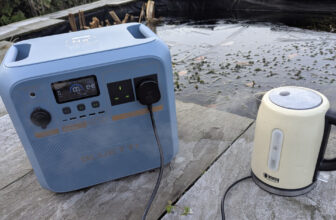
Best Camping Power Packs – Top Portable Power Stations UK
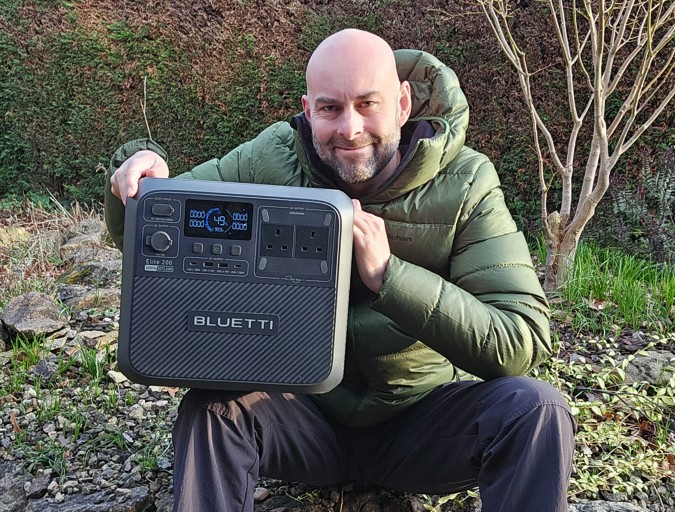
The Bluetti Elite 200 V2 may be one of the most compelling portable power stations we’ve ever tested for campervan use. Designed to deliver serious power in a remarkably small footprint, the Elite V2 combines performance, efficiency, and reliability in a single unit. With a powerful 2.6kW inverter and 2,074Wh capacity packed into a compact case, it offers a real leap forward in portable energy for camping.
Whether you’re powering heavy-duty appliances like kettles and hair dryers or quietly charging devices overnight, this all-in-one power pack stands out from the competition and is certainly a Camping Secrets Best Buy.
Size and Dimensions
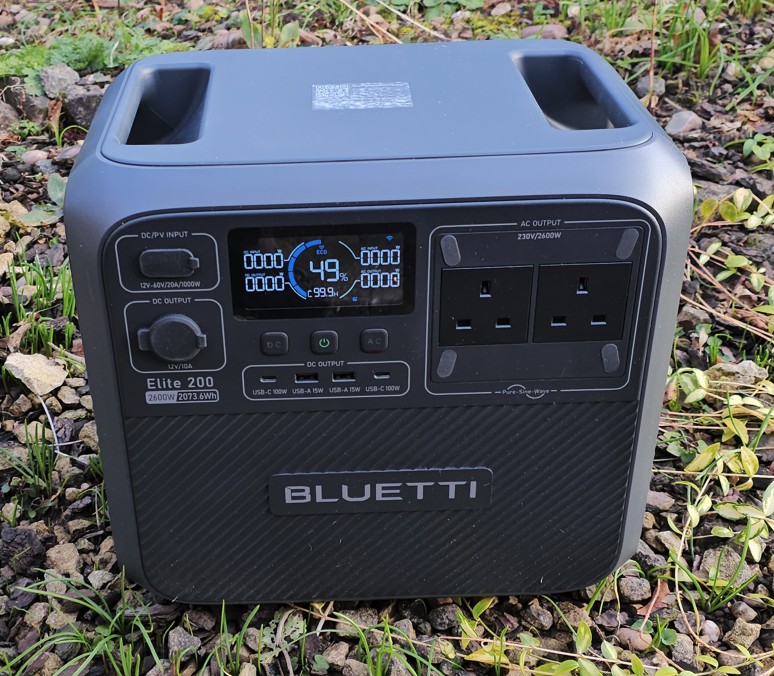 What sets the Bluetti Elite V2 apart is its extremely compact size for the power and battery storage capacity it has on board – this makes it perfect for small campervans where space is at a premium. However, this compact form factor does come with a bit of heft – the Elite weighs approximately 24kg. It’s not something you’ll want to carry long distances, but it’s manageable for setup and short moves, or of course in a permanent setup on board your van.
This smaller size makes it a smarter alternative to larger units that offer similar capacity but take up far more space. Compared to something like the Jackery 2000 Pro or Plus, the Elite V2 wins out in portability and longevity thanks to the automotive-grade lithium iron phosphate (LiFePO₄) battery chemistry coupled with a highly efficient and almost lossless inverter.
Key Features
Inverter and Output Power:
A whopping great 2.6kW inverter delivers plenty of power for pretty much ALL camping appliances. Bluetti’s Power Lifting Mode allows the unit to run high-rated resistive appliances up to 3.6kW by reducing voltage and maintaining a constant power output. This means you can boil a standard 3kW household kettle, albeit slightly slower than normal.Battery Chemistry:
Bluetti uses automotive-grade LiFePO₄ batteries rated for 6,000+ charge cycles. Even after about 20 years of use, the unit retains around 80% of its original capacity—dramatically outperforming even other Bluetti power stations – the Elite really lives up to its name here.Efficiency:
In real-world tests, the AC inverter delivered 96% efficiency—perhaps the highest we’ve seen in this category. That means you get close to the full 2.07kWh of usable power, an excellent result considering most competitors hover around 80-85%.Charging Speed:
From 0% to 100% took just 1 hour and 10 minutes in Turbo Charge mode using mains power, with the first 80% achieved in just over an hour. The inverter can even restart automatically when the battery reaches 5%, useful for remote reboots.Connectivity and Controls:
The Elite V2 includes a Bluetooth/Wi-Fi enabled app and a responsive front display that shows real-time input/output and battery details. Control can be done via the app or manually on the unit itself.Solar Input:
The unit supports up to 1,000W of solar via an XT60 connector, making it highly adaptable for off-grid setups. Bluetti supplies MC4-to-XT60 cables for easy hookup.Outlets and Ports:
Two UK AC outlets (limited by size constraints), two 100W USB-C ports, and two USB-A ports are built in. There’s also a 12V car-style DC outlet, but no wireless charging pad or battery expansion options. We perhaps would have liked to have seen an extra AC output but we’re quibbling a bit here – it would have made the front panel too big.Noise Levels:
During both output and charging, the Elite V2 remains exceptionally quiet—even under load or during turbo charging. This is a welcome bonus for vanlifers and light sleepers alike.UPS Mode:
The built-in uninterruptible power supply (UPS) switches to battery power in under 15ms, keeping sensitive devices like computers or TVs running during outages.
Summary
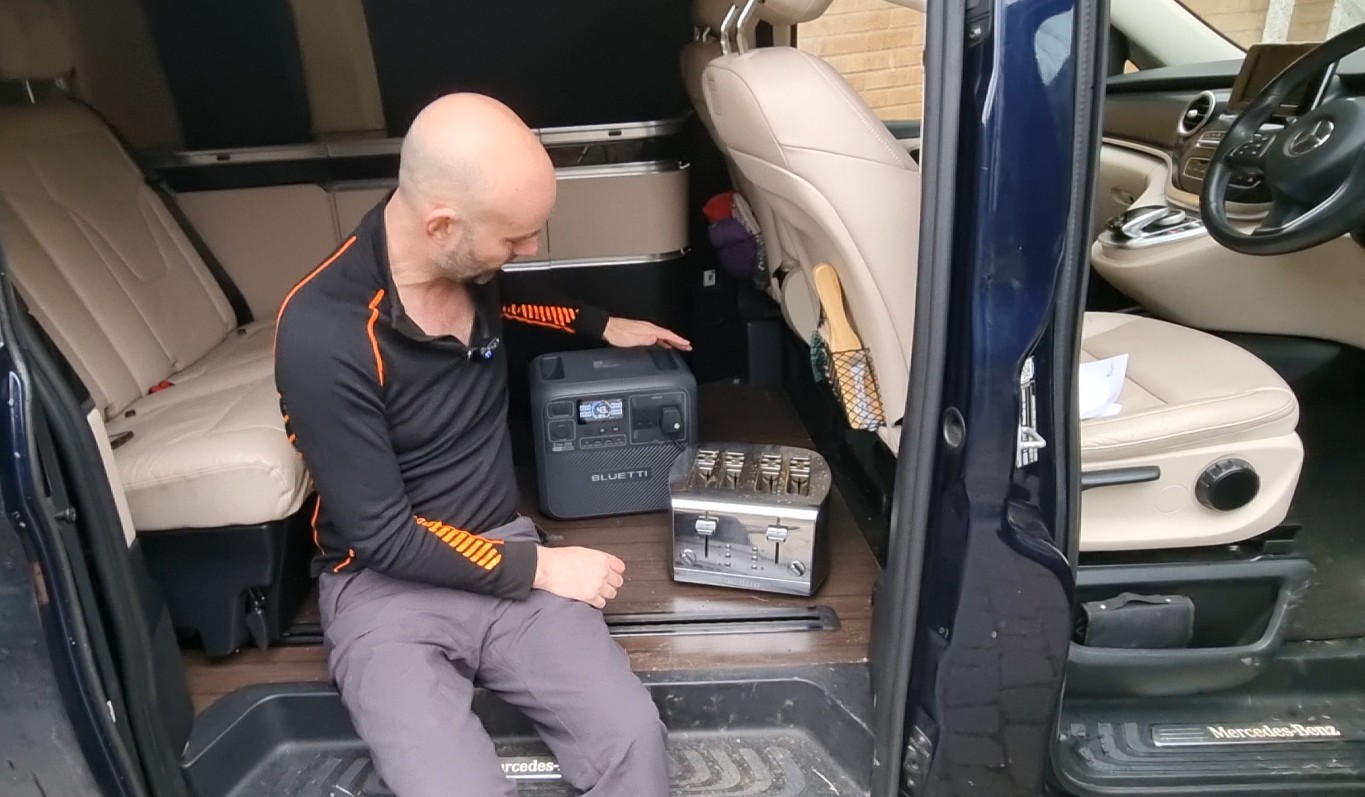
The Bluetti Elite V2 is a standout portable power station that delivers exceptional performance in a compact and practical form. It’s ideal for campers and vanlifers who need high power output without sacrificing space. With a 2.6kW inverter and support for appliances up to 3.6kW using Power Lifting Mode, it’s capable of running everything from kettles and toasters to hair dryers and cool boxes.
What makes the Elite V2 particularly impressive is its class-leading efficiency. During testing, the unit delivered an outstanding 96% efficiency through its AC inverter—one of the highest figures we’ve ever recorded. It also uses long-lasting lithium iron phosphate (LiFePO₄) batteries rated for over 6,000 cycles, ensuring durability and reliability over many years of use.
That said, the unit does come with a few limitations. It only offers two UK AC outlets, which may be restrictive for some setups. There’s no wireless charging pad, and unlike some competitors, the Elite V2 doesn’t support battery expansion. At 24kg, it’s also fairly heavy, though the size makes it manageable for short movements.
Overall, the Bluetti Elite V2 is our favourite power station for campervan use where space is a premium. It combines high output, impressive efficiency, fast charging, and quiet operation in a design that fits easily into small van spaces. We think it offers exceptional value and reliability for weekend adventures and short off-grid escapes – check out our video review below!
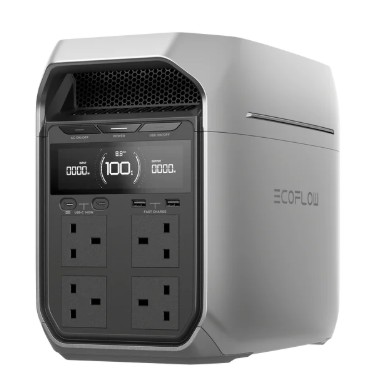 The EcoFlow Delta 3 is a fantastically capable mid-range power station, which is able to drive all your power-hungry appliances. In our view it has more than enough power for any camping trip at 1800W, and with all the features that Ecoflow have managed to pack in for the price, it has to be the best camping power pack on the market at this time.
The Delta 3 follows on from the incredibly successful Ecoflow Delta 2 and improves some of the main features – most notably adding battery expandability and whisper-quiet operation.
Check out our full length review of the Ecoflow Delta 2 here. Now that the Delta 3 is released, it can actually be purchased for a bargain price, and is still a fabulous buy in our view.
What’s the Difference Between the Ecoflow Delta 2 and the new Delta 3?
The EcoFlow Delta 3 builds on the Delta 2’s strengths with several key upgrades. While it maintains the same base capacity of 1024Wh, it now supports modular expansion up to 5kWh, making it far more scalable for longer off-grid use or home backup. The Delta 3 delivers a solid 1800W AC output (same as the Delta 2), with a surge capacity of 3600W, and features EcoFlow’s X-Boost technology, which allows it to power resistive loads up to 2400W without tripping — perfect for devices like kettles, toasters, and hairdryers that momentarily draw more power.
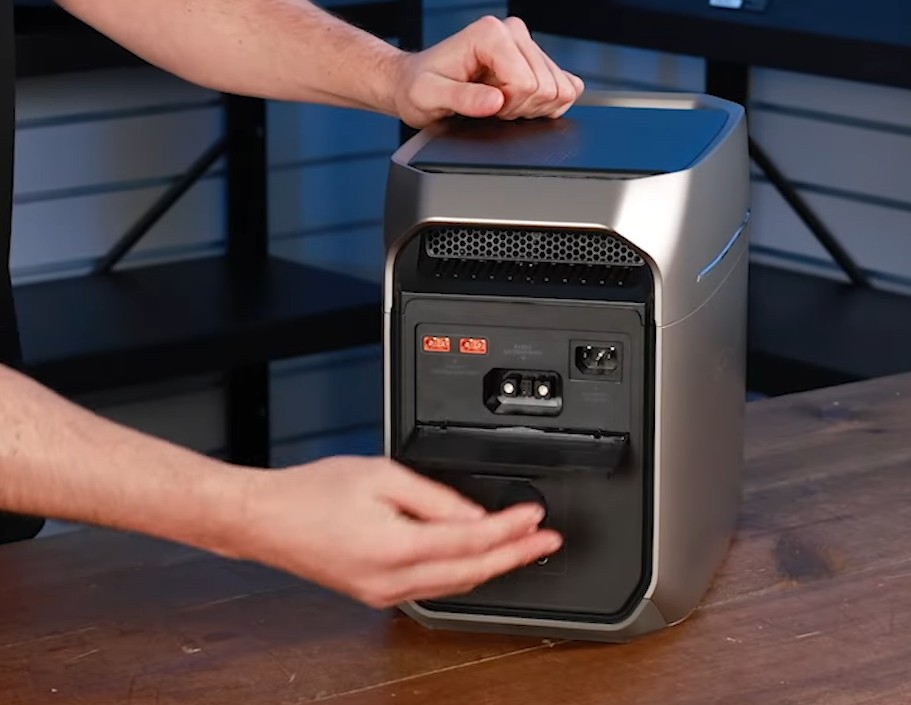 The Delta 3 is uprated to now include dual solar inputs (500W each) for faster and more flexible solar charging. Another highlight is its 10ms uninterruptible power supply (UPS) response, which keeps sensitive electronics online during outages – this is very fast.
With improved fan design, the Delta 3 operates at just 30dB noise level (for <600W loads), making it exceptionally quiet for indoor or campsite use. This was a real negative with the Delta 2, which was renowned for being noisy. Overall, the Delta 3 offers a refined and future-proof upgrade with more muscle and flexibility than the Delta 2.
Specifications and Features of the EcoFlow Delta 3
Supplying up to 1800W of power from 4 x 240V 3-pin sockets, the EcoFlow Delta 2 is right up there with the Bluetti AC180 in terms of being able to drive the most power hungry devices in your camping setup – both AC and DC or USB. Hair dryers, toasters and electric stoves are not a problem for it at all. We had success charging our ebikes with it too.
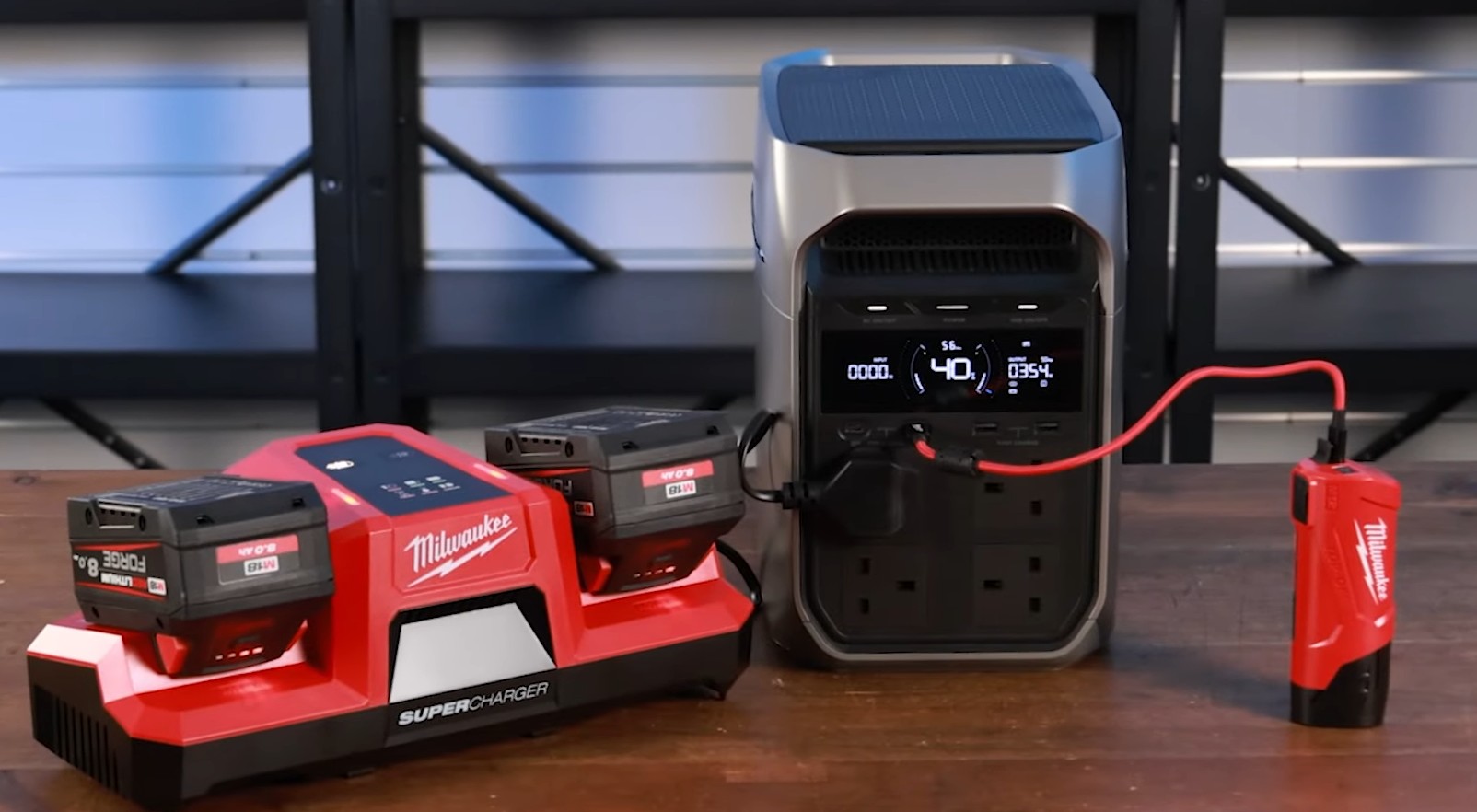
The design of the Delta 3 is extremely futuristic and looks amazing. Dimensions are 39.8cm x 20cm x 28.4cm, and it weighs 12.5kg – not bad for the oomph that it packs. In terms of USB sockets you get 2 x USB-C 100W sockets, 2 x USB-A 18W quick charge sockets and also 2 x DC5521 12v outputs as well as a 12V cigarette lighter output on the back.
Great Design
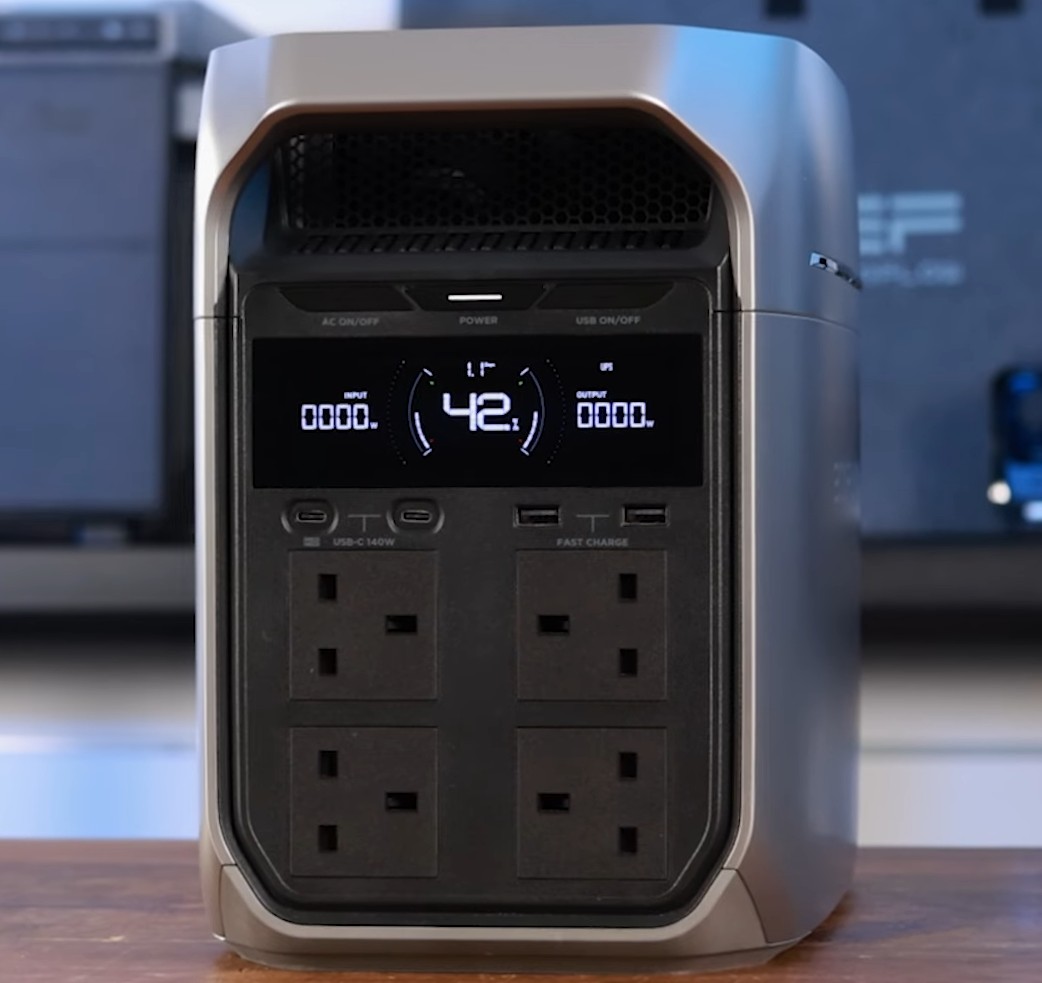
Two areas where EcoFlow excels are the display and the charge time. Both are easily class-leading on the Delta 3. The display is bright and actually shows useful information including time left till discharge – very useful.
Similarly, with up to 1500W for charging the Delta 3 from the mains, you can be fully charged from 0-100% in less than an our, when the rivals may only be 75% charged in that time. The Delta 3 is also extremely quiet in terms of fan noise – something which couldn’t be said with its predecessor, the Delta 2.
In conjunction with a solar panel, the Ecoflow Delta 3 can be the hub of your camping setup power, allowing off-grid life to continue for weeks on end. We highly recommend it.
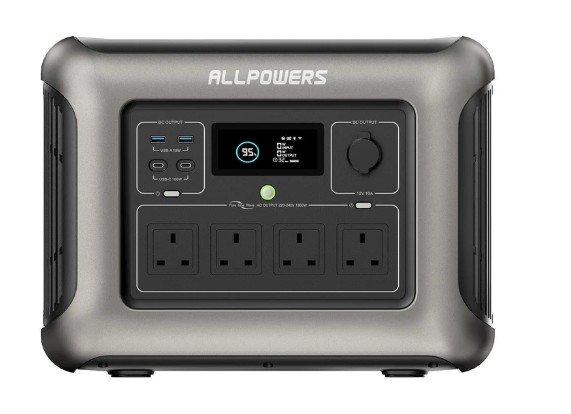 If you’re in the market for a portable power station that offers serious performance without breaking the bank, the AllPowers R1500 hits a pretty compelling sweet spot. It delivers a well-balanced mix of power, capacity, and price—making it a strong contender for anyone looking to power up their motorhome, garage, or off-grid setup without overspending.
What sets the R1500 apart is its ability to handle real-world energy needs without overcomplicating things. With an 1800W output and up to 4 UK AC sockets, it’s built to run multiple devices or appliances at once—ideal for both daily use and emergency backup. Whether you’re looking for a reliable travel companion or a practical home power solution, the R1500 offers great value in a crowded market.
Size and Dimensions
For a power station packing 1152Wh of LiFePO₄ battery capacity and an 1800W output, the AllPowers R1500 keeps things surprisingly compact. Measuring 413 x 312 x 265 mm (16.25 x 12.28 x 10.43 inches) and weighing in at 16.7 kg (36.8 lbs), it’s portable enough to stow easily in a car, motorhome, or garage shelf—without feeling flimsy or underpowered.
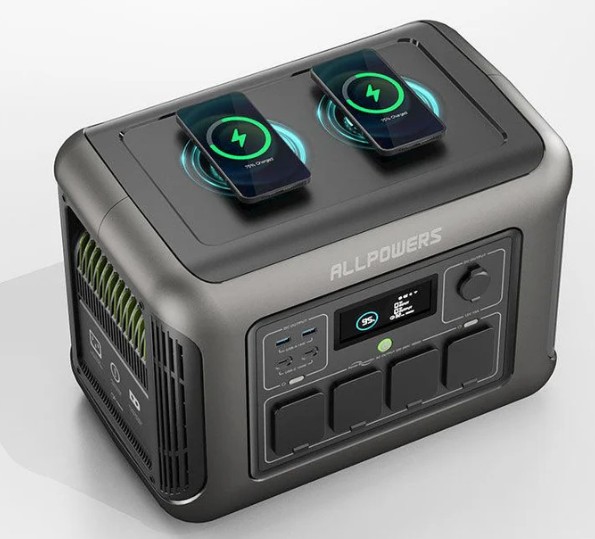 The size reflects a thoughtful design that balances storage efficiency with internal cooling and accessibility. Integrated side handles make it manageable for one person to lift and move, whether you’re repositioning it in the garage or hauling it to a campsite.
It’s not ultralight, but considering it supports up to 4 AC outlets, dual 15W wireless chargers, and expandability via B1000 battery packs, the R1500 offers an impressive power-to-footprint ratio. If you’re looking for serious off-grid performance without dedicating half your boot space, this form factor hits a very practical sweet spot. Using additional battery packs allows the capacity to be expanded from 1152Wh to a mighty 4608Wh.
In Use
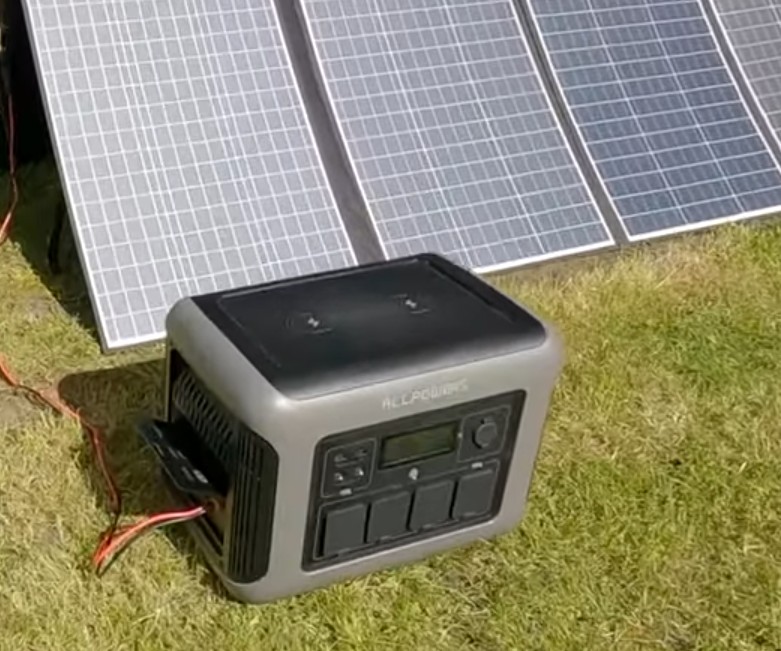 After six months of regular use, the AllPowers R1500 has proven itself to be a solid and dependable performer in our home and campervan. It might not have the brand recognition of Jackery, EcoFlow, or Bluetti, but it quietly gets the job done—delivering consistent power without unnecessary fuss.
The 1800W output is more than capable for typical off-grid camping needs. From powering laptops and lighting to running larger appliances like a mini fridge or even a toaster, the R1500 handles it all without drama. The LiFePO₄ battery chemistry offers peace of mind too, with stable performance and no noticeable degradation over time.
It’s also quick to recharge. Whether plugged into the wall at home or paired with solar panels, the R1500 tops up efficiently, meaning less waiting around and more time being productive. The display is clear and informative, showing input/output power and remaining battery level in real time—useful when you’re juggling multiple devices.
What stands out most is its quiet reliability. No flashy features, just steady performance day after day. For the price point on offer, the Allpowers R1500 is hard to fault.
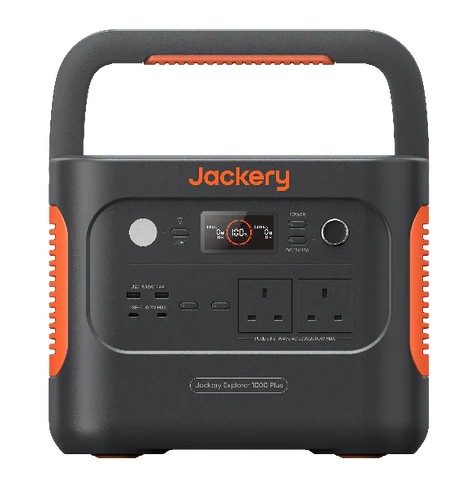 Jackery are based in Silicon Valley, and are a great US success story in the world of clean energy generation and power storage. We’ve viewed many of their power packs in detail (2000 Pro, 2000 Plus), and have seen how they have evolved class leading features over time. In terms of ruggedness and simplicity of use, Jackery products are second to none.
Our favourite range is the new Plus series primarily because they offer expandable battery capacity together with the usual Jackery reliability and ease of use. The Plus range comes in a variety of capacities (100Wh, 300Wh, 1000Wh and 2000Wh), and you will need to choose the one for your needs.
Our pick of the bunch for camping is the Jackery 1000 Plus which hits the sweet spot of price vs performance in our view! It has a 1264Wh capacity and is able to power items with a combined average draw of 2000W – very nice indeed! Under surge conditions (i.e. when switching on a high current appliance), the power can momentarily rise to 4000W which is class leading. This opens the options up to appliances like proper house kettles.
Dimensions are quite compact at 35.6 x 26 x 28.3 cm, and the weight is a fairly reasonable 14.5kg. The Plus range use LiFePO4 battery tech, and offer 4000 cycles for 70% capacity – this is pretty standard in terms of the industry.
Charging the 1000 Plus
Charging is simple and can be achieved via the usual 12V car adapter, 240V mains or solar panels (the 200W SolarSaga panels are our recommendation for this pack). Charging is pretty brisk at up to 2.4kW, taking about 1.5 hours in total – Jackery tend to opt for slightly slower charging in order to maximize battery lifetime.
On solar, you can get similar charge times with the max input of 800W, but you need alot of panels which can get expensive. Using 4 x 200W panels could get you fully charged in about 2.5 hours, but this is highly unlikely in the UK.
Output Power – Unleash The Force
Outputs are numerous and include 2 x 240V AC outputs, 4 x USB ports (2 x 100W USB-C and 2 x 18W USB-A). The USB-C sockets in particular are useful and I’m glad to see that Jackery have put the high power quick charge varieties in the Pro series. There is also a standard 10 amp, 12V cigarette lighter style output for powering familiar camping products like cool boxes and tent lights etc.

In Use
We love the fact that you can power devices and charge the Jackery 1000 Plus at the same time – this is a really useful feature which adds to the flexibility. In particular, using solar power to charge the pack is a blast. There’s nothing quite like generating your own power for free and creating what feels like perpetual motion – you use the power and the sun provides you with more power at the same time. I had a great 8 hour workday in my campervan whilst using the Jackery to keep my laptop and coolbox running, without draining the power down at all – this was in the winter months and so with full sunlight it should be even more impressive.
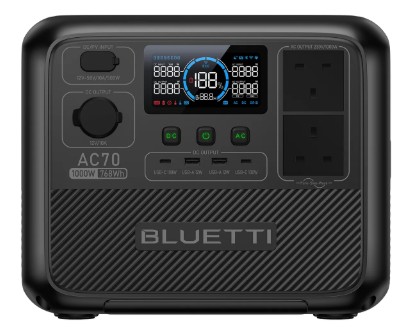 The Bluetti AC70 power station is an impressive offering from Bluetti, and we think it slots in at a great ‘intermediate’ price point together with its big brother the AC180. The AC70 offers a decent amount of storage (768 watt hours) whilst also delivering enough power (1000W) to drive toasters, cool boxes, kettles and induction hobs – i.e. just the sort of gear you’re likely to want to spark up at the campsite. Yes you can pay less for a smaller inverter and less power (e.g. the ultra-compact Ecoflow River 3, or Bluetti’s own EB3a), but we think you will miss the ability to drive higher power items for not much extra financial outlay.
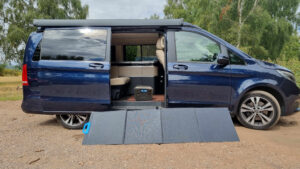
We’ve owned the AC70 for about a year now and have used it extensively in our Mercedes Marco Polo campervan. Bluetti use LiFePO4 (Lithium Iron Phosphate) cells in their battery packs which allow almost six times as many charge/decharge cycles as standard lithium-ion ‘NMC’ cells and are much safer.
Key Features
So what other features do you get with the AC70 power pack? Well there are a plethora of outputs for starters. You’ve got 2 x 240V AC outputs (3-pin sockets) which allow you to drive your bigger electrical items. There are four USB sockets (2 x USB-C high power 100W sockets and 2 x USB-A 12W), and also a car cigarette 12V output. The USB-C sockets are excellent because at 100W they are perfect for charging modern laptops.
Design
In terms of design, it’s one of the best looking power stations on the market in our view. The colour LCD screen in the middle of the front face tells you how much battery you have left (using a percentage and graphical illustration) as well as the current charge/discharge time calculated from the current rate of either.
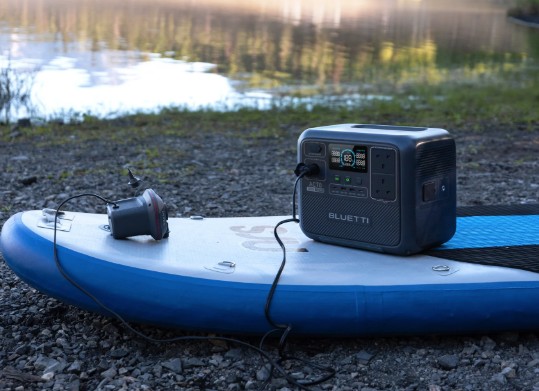 The display also shows how much power is coming in from the mains or solar panel, and also how much is going out to your devices. We tested the accuracy of this reading with a power meter, and it was accurate to about 1% (i.e. very good).
Finally, you can use the Bluetti smartphone app to log in to your power station and see all of the above details from the comfort of your chair – you don’t even need to stand up!
Dimensions
In terms of weight and dimensions, the AC70 is at a very nice sweet spot between being too big and bulky versus being so small that it cannot supply or store enough power. The AC70 measures only 31.4 x 21 x 25.6cm and weighs just over 10kg. With two integrated handles on top, it’s a doddle to pick up by anyone.
Charging the Bluetti AC70
We found that charging via the UK mains takes around 1.5 hours from flat in turbo mode (950W input power) which is perfectly acceptable in our opinion (although some of the competition are faster than this).
The AC70 comes with standard cables to take a range of solar panels. We tested with the Bluetti PV200 solar panel which is a foldable four panel product, supplying up to 200W in full sunshine. Together, the AC70 with the PV200 make a great solar generator combination.
In conclusion, the Bluetti AC70 is our current favourite value power pack for camping on the UK market when you take price into the equation. It covers a wide range of camping requirements for devices requiring up to 1000W of power with an ample amount of storage in a reasonably sized package. We’ve boiled kettles, charged phones, laptops and even made toast with it – check out our video review below too!