Why Choose a Separation Toilet for Off Grid Camping?
Need a toilet that uses no water and doesn’t rely on chemical disposal points? The Thetford separation toilets are designed exactly for that. They give campervans, caravans and motorhomes the freedom to stay off grid without needing campsite water supplies or access to a chemical waste facility.
When it comes to disposal, the process is straightforward. Urine can be tipped into any standard toilet, and the solid waste can go out with normal household rubbish, as long as local rules allow it. A drying agent is added after each use, which absorbs moisture and leaves the waste much drier and easier to handle. You can buy dedicated waste bags that are made from strong recycled plastic, helping to contain everything securely and keep odours under control once sealed. The system is designed to make off grid waste disposal clean, simple and hassle free.
If you’d like to explore other toilet options beyond the separation range, take a look at our comparison page covering different styles of portable toilets. You’ll find a full overview under Best Camping Toilet, which is a useful guide if you’re still weighing up what type suits your setup best.
If you’re also considering a more portable toilet from Thetford, we have a separate guide that looks at the full Porta Potti lineup. You can Compare Thetford Porta Potti Toilets there, with details on sizes, features and which models work best for different camping setups.
What is a Thetford Separation Toilet?
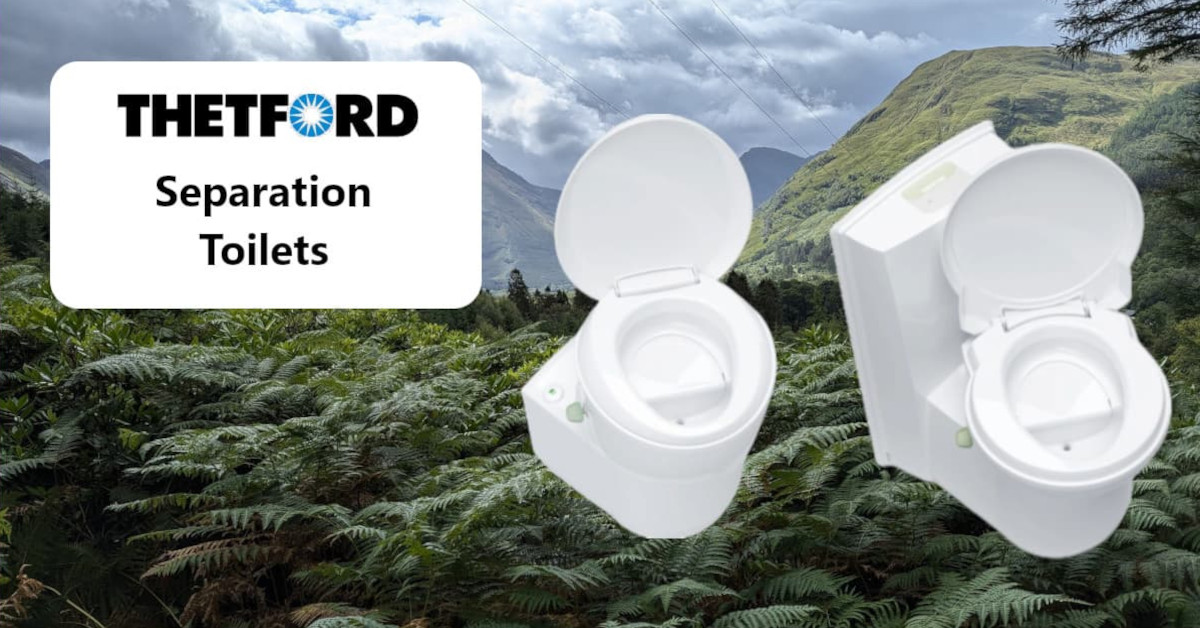
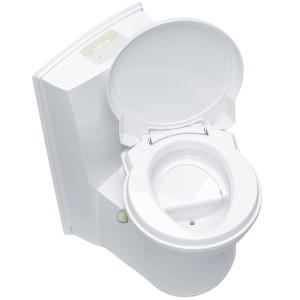
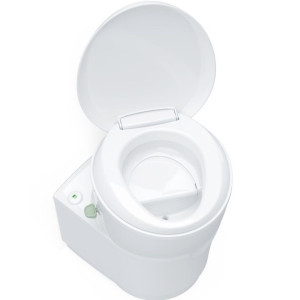
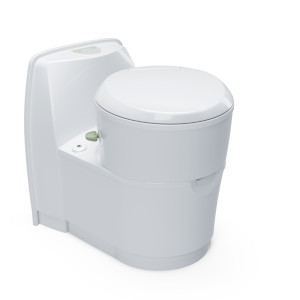
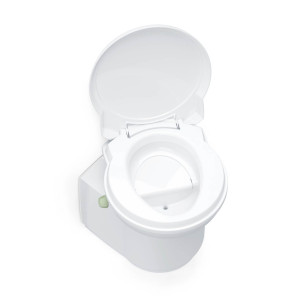
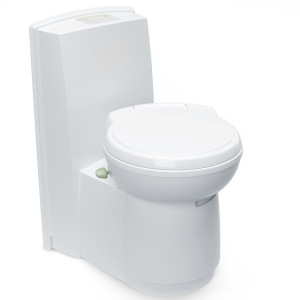
A Thetford separation toilet looks much like a standard caravan or motorhome toilet. The seat is set at a normal height, just under 500mm, so there’s no awkward squatting, and it comes with a lid you can close to help keep any nasty niffs under control.
A lever on the side of the toilet opens a large flap in the bowl so solid waste can drop into a bucket lined with a strong purpose made bag. At the same time, a small opening at the front of the bowl directs urine into its own separate tank.
Thetford Separation Toilet Range
220 Series
260 Series
Series Overview: S220 vs S260
The 220 and 260 series share the same core idea where both are waterless separation toilets designed for off grid use, with identical waste capacities and the same overall functionality. The differences mostly come down to size, installation fit and the way the urine tank level is monitored.
Size and fit
The 220 series is the more compact option, which helps when space is tight or you’re working with a smaller van layout. The 260 series has a deeper front to back profile and suits installations where a little more room is available.
If someone is swapping out a standard C220 cassette toilet, the S220 will fit more naturally in its place, and the same applies to the S260 when replacing a C260.
Seat height
The 220 series has a higher seat height at around 492 mm. The 260 series sits lower at around 467 mm, which some users may find more comfortable depending on their layout.
Urine tank level indication
This is the clearest functional difference.
- 220 series: Mechanical level indicator
- 260 series: Electronic level indicator
The electronic version gives a more precise reading but also introduces a small electrical component that some off grid users may or may not prefer.
Shared features
Both series use the same 7 L solids bucket, 7.5 L urine tank, recycled plastics and the same ergonomically shaped bowl with a visual blade to cover waste. Installation and day to day use are almost identical across the range.
Thetford Separation Toilet Specification Table
| S220-S | S220-CS | S260-S | S260-CS | |
|---|---|---|---|---|
| Dimensions (mm) | 495 x 365 x 580 | 534 x 394 x 580 | 488 x 340 x 603 | 740 x 417 x 603 |
| Seat Height (MM) | 492 | 492 | 467 | 467 |
| Type of electrical connection | N.A | N.A | 4 pole plug | 4 pole plug |
| Level indication urine tank | Mechanical | Mechanical | Elektronic | Elektronic |
| Net Weight (Kg) | 6.8 | 7.2 | 7.1 | 8 |
| Position Door 3 / Flush Door 3 | Portrait or Landscape | Portrait or Landscape | Lanscape | Landscape |
| Partnumber | 212451SP | 212453SP | 212461SP | 212463SP |
| Urine Tank (L) | 7.5 | 7.5 | 7.5 | 7.5 |
| Solids Bucket (L) | 7 | 7 | 7 | 7 |
Difference between S220, S260 and SC220, SC260
S220
SC220
S260
SC260
The Thetford Separation Toilet model S needs to be fitted against a recessed wall so the rear section of the base can sit inside the recess. Its base is longer because it houses two separate waste tanks running in sequence to each other, one behind the other. One for urine and one for solids. This makes the lower section project further than the upper body of the toilet. The recess simply hides this extra depth.
The S220 places its urine level indicator on the base of the toilet where whereas the S260 has a wall mounted display panel.
The Thetford Separation Toilet SC includes its own integrated back panel that looks very much like a cistern with the recess built in, so it can be installed directly against an external van wall without needing the same cavity behind it. On this version for both SC220 and SC260 models, the level indicator is positioned on the top of the back panel for easier visibility.
Both versions still require an external wall opening to remove the waste tanks as you would a cassette for a cassette toilet.
Separation Toilet Must Have Accessories
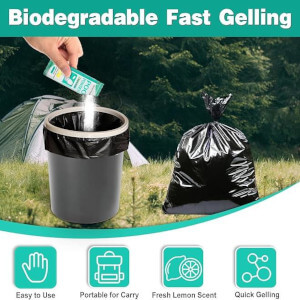
Absorbant Gel Sachets
Pop some gel into the solids bucket to absorb any liquid to help keep smells at bay.
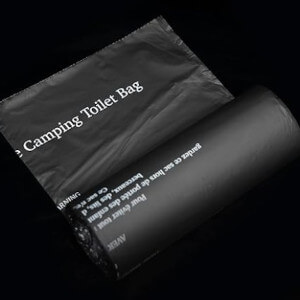
Biodegradable Bags
Eco friendly biodegradable toilet bags to line the Thetford waste bucket.
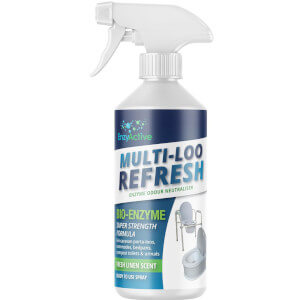
Urine Tank Fresh
Breaks organic waste at the source for deep cleaning and odour elimination.
How to Empty a Thetford Separation Toilet
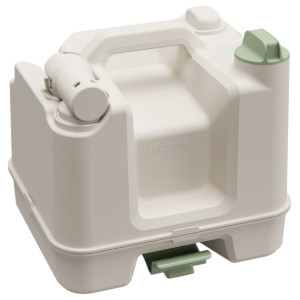
Emptying the toilet is straightforward because the urine and solids are collected in separate tanks. Both tanks are accessed through the external service door, which is part of the installation on every model.
Urine Tank
The urine tank will usually need emptying first. Slide it out through the access hatch, keeping it level as you remove it. The tank has a sealed cap and a dedicated pour spout, which makes disposal simple at any suitable toilet block, toilet waste point or in the wilderness well away from other people. Once emptied, give the tank a quick rinse, refit the cap and slide it back into place.
Solids Bucket
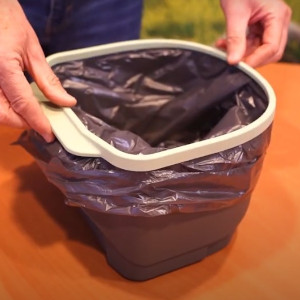
The solids bucket sits inside the toilet’s base and is lined with a compostable bag. Lift the bucket out through the same access door, tie off the top of the liner and dispose of it in line with local waste rules. If you’re using a compostable liner and camping somewhere that allows this type of waste in composting systems, you can follow their guidance. Wipe the bucket clean before putting in a fresh liner and returning it to the toilet.
Reassembly
Both containers slide back into position with minimal effort. Make sure the seals are correctly seated and the service door is fully closed to prevent smells from entering the living space.
This routine only takes a few minutes and keeps the toilet performing reliably, especially on longer off grid trips.
How to Clean a Thetford Separation Toilet
Routine cleaning is simple and doesn’t require any specialist products. The toilet is designed so that the parts you handle most often are easy to reach and made from materials that clean well with mild detergents.
Bowl and seat
Wipe the bowl, seat and lid with a gentle, non abrasive cleaner suitable for plastic. A soft cloth or sponge is enough to remove dust, marks and any residue. Avoid bleach or strong chemical cleaners, as they can damage the surface over time.
Solids bucket
The solids bucket is lined during use, so it doesn’t need heavy scrubbing. After emptying, remove the liner and rinse the bucket with warm soapy water. Make sure it’s completely dry before fitting a new liner, which helps reduce moisture and odours.
Urine tank
Rinse the urine tank with warm water after emptying. If scale builds up, a small amount of mild descaler can be used, as long as it’s safe for plastic. Shake the tank gently to dislodge residue, then rinse thoroughly.
External surfaces and access hatch
Clean the outside of the toilet and the service door in the same way as the bowl. Keeping the access hatch clean helps maintain the seals and makes tank removal easier.
Regular checks
Every so often, check the seals and moving parts (such as the visual blade or the tank caps) for any dirt or buildup. A quick wipe keeps everything moving smoothly and prevents wear.
This light routine keeps the toilet hygienic and working reliably, even with frequent off grid use.
User Manuals and Installation Instructions
For detailed information on installation, operation and maintenance, visit the manufacturer’s website. There you’ll find three key resources to download:
The User Manual, which covers day-to-day use, tank removal and routine checks.
The Installation Manual guided step-by-step through fitting the toilet, plumbing and ventilation setup.
S220 & SC220 Installation Manual PDF
S260 & SC260 Installation Manual PDF
The Spare Parts Manual lists all component parts and part numbers for future servicing needs.
S220 & SC220 Spare Parts Manual PDF
S260 & SC260 Spare Parts Manual PDF
Simply follow the links to access and download those documents from the manufacturer’s official download page.
Questions & Answers
What is a separation toilet and how does it work?
A separation toilet divides liquid and solid waste into two separate tanks. This removes the need for flushing water and helps control smells by keeping moisture away from solids. The urine tank is emptied more frequently, while solids are collected in a lined bucket.
Do the Thetford separation toilets use any water?
No, all models in the range are completely waterless. This makes them suited to off grid camping, van conversions and situations where water supply is limited.
What are the main differences between the 220 and 260 series?
The 220 series is slightly more compact and has a higher seat height. The 260 series has a deeper footprint and a lower seat height. The 220 uses a mechanical level indicator, while the 260 uses an electronic one.
What is the difference between the S and SC versions?
S models need to be fitted against a recessed wall because the twin tanks create a deeper base section. SC models include an integrated back panel with the recess built in, so they can mount directly against an external wall. The level indicator is also placed differently: at the base on S models and at the top of the back panel on SC models.
Do all models share the same waste capacity?
Yes. Every toilet in the range has a 7 litre solids bucket and a 7.5 litre urine tank.
How often do the tanks need emptying?
This depends on the number of users and how often the toilet is used. In general, the urine tank fills first and may need emptying daily or every couple of days for two people. Solids take much longer because they stay dry and compact.
Is ventilation required?
The toilet works without a fan, but good airflow is always recommended to manage moisture and keep the installation area fresh. The installation manual provides guidance on venting options.
Can the toilet be used in freezing temperatures?
Yes, but the urine tank may freeze if temperatures drop far below zero. Some users switch to a small amount of biodegradable antifreeze when winter camping, but it’s best to check manufacturer guidance.
Do the toilets require a 12V electrical connection?
Only the 260 series uses electronics for the level indicator. The 220 series is fully mechanical and needs no electrical supply.
Is there a specific type of bag or liner recommended for the solids bucket?
Thetford recommends using their compostable liners sized for the 7 litre bucket. Many standard compostable bags also fit, but it’s worth checking dimensions to prevent tearing.
Can cleaning products be used inside the bowl?
Yes, as long as they are mild and suitable for plastic. Avoid bleach or highly caustic cleaners as they can damage the bowl surface.
Does installing the toilet require cutting a hole in the van wall?
Yes. All models need an external access point so the waste tanks can be removed. The size and position depend on the model and are detailed in the installation manual.
Is the toilet comfortable for everyday use?
The shape is based on Thetford’s cassette toilet design, so the seat height and bowl ergonomics feel familiar. The experience is similar to a standard caravan toilet but without flushing.

A non-chemical alternative option
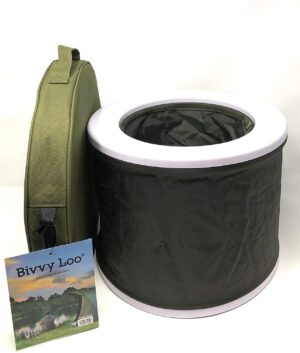
A cheaper alternative to a chemical toilet is the more simply designed Carplife Bivvy Loo, which is not only portable but can be folded down to just 41 x 35 x 8 cm.
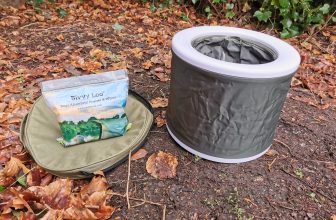
Easy to store and easy to use. It comes with compostable liner bags, sachets with absorbent gel and biodegradable wipes.
The liner bags simply fit inside the bivvy loo with the gel placed in the base to absorb any liquids.
To find out more, see our dedicated post on the Carplife Bivvy Loo