Portable Power Stations for Beginners: Understanding Watts, Watt-Hours and Efficiency
If you’ve ever looked at a portable power station and thought, “What do all these numbers mean?” — you’re not alone. This beginner-friendly guide breaks it all down into simple terms, with easy analogies to help you make the right choice for your next camping trip or power outage.
1. Power Output – What Can You Plug In?
Unit: Watts (W)
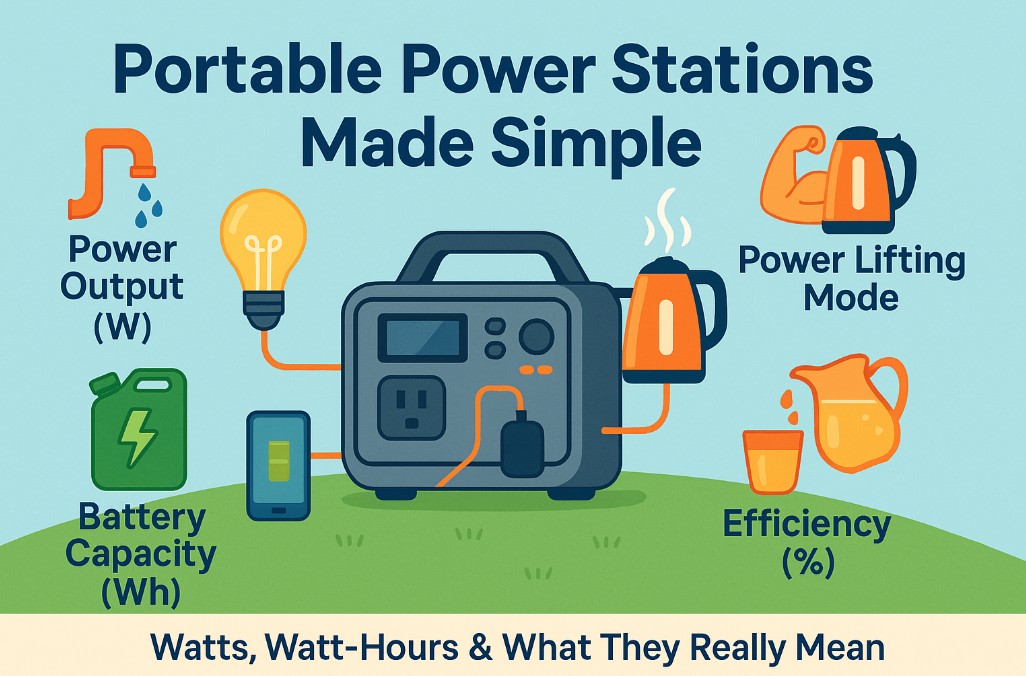
Analogy: Imagine electricity flowing through a pipe. The wider the pipe, the more electricity flows. That flow is measured in watts.
- Steady-State Power (Rated Output):
This is the maximum continuous power the station can supply without overheating or shutting down.
Example: A 1000W power station can continuously run a 1000W hairdryer. - Surge Power (Peak Power):
Some devices need an extra jolt of power to start up—like a fridge or blender. Surge power covers that brief spike.
Analogy: Like a car needing extra power to start on a hill.

2. Power Lifting Mode – Running High-Rated Resistive Loads
What It Is:
Power Lifting Mode allows the power station to run resistive appliances (like camping kettles, toasters, or electric heaters) that are rated above the continuous power limit of the power station. It achieves this by intelligently adjusting the voltage and current to prevent overload, even if it takes longer to do the job.
- Important: It doesn’t increase actual output power — it just runs the device in a throttled or altered state.
Analogy: It’s like trying to boil a kettle with a lower heat setting. It still works, just more slowly.
- Example: A 2,000W-rated power station in Power Lifting Mode might run a 3,000W kettle by reducing voltage, so it draws only 2,000W. The water still boils, just not as quickly.
3. Battery Capacity – How Long Will It Last?
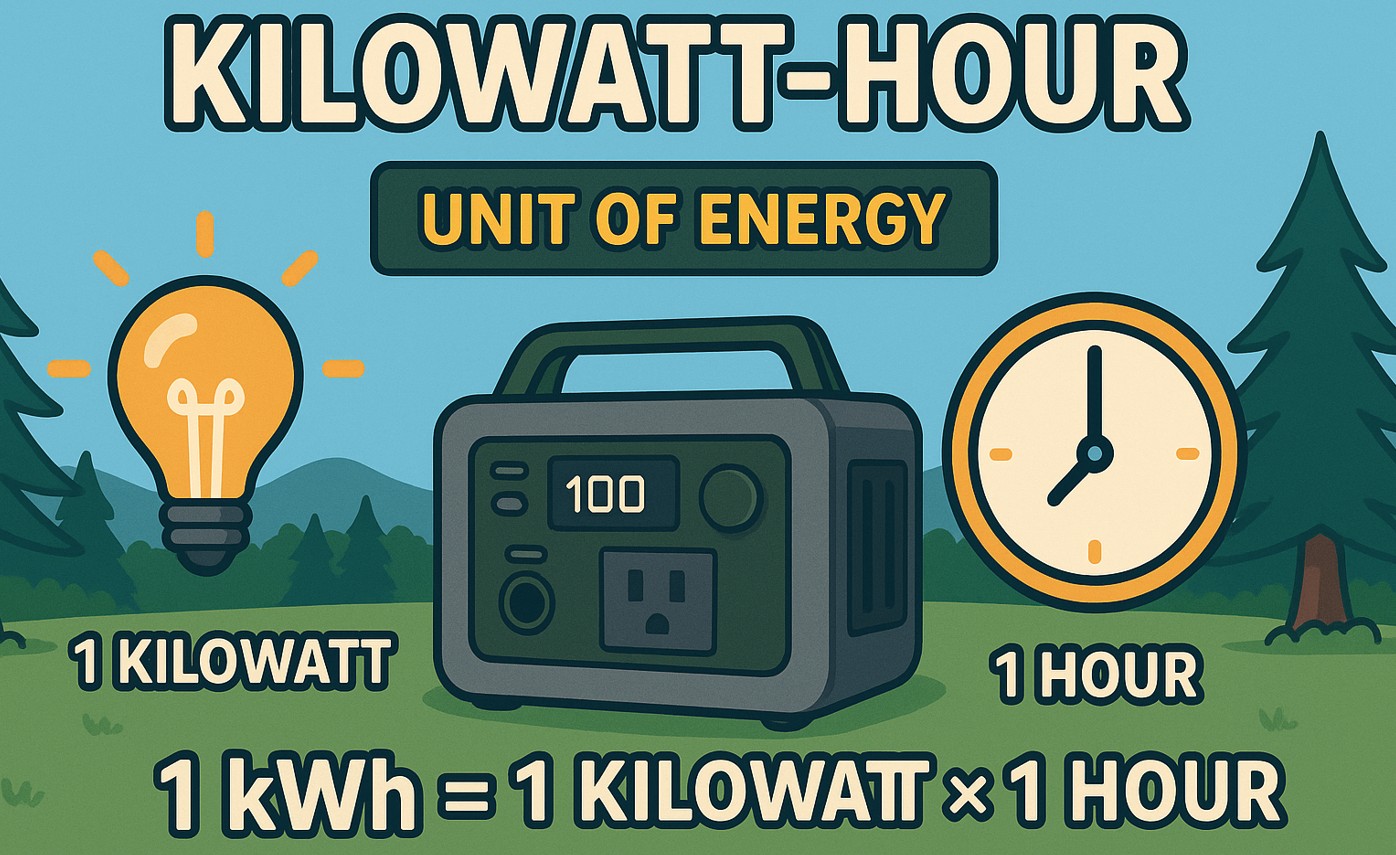
Unit: Watt-Hours (Wh)
Definition: Watt-hours measure how much total energy is stored in the battery.
Analogy: Think of it like a fuel tank. The bigger the tank (Wh), the longer you can run your gadgets.
- Example: A 500Wh battery can run a 100W appliance for 5 hours (500 ÷ 100 = 5).
4. Efficiency – Not All Energy Gets Used
What It Means:
Efficiency refers to how much of the battery’s stored energy actually powers your devices. Some energy is lost during conversion from DC (battery) to AC (appliance).
- Typical range: 80–90%
Analogy: Pouring juice from a jug into a cup — some spills on the counter. Efficiency is how much juice makes it into the cup.
- Example: A 1000Wh battery with 85% efficiency gives you around 850Wh of usable power.