7 Reasons a Lithium Leisure Battery Is A Great Choice For Your Caravan
Upgrading Your Camper to Lithium Batteries – The Benefits
As we’ve mentioned, lithium batteries last longer than their lead-acid counterparts. This is just one benefit of upgrading your camper from a regular lead-acid battery to a deep-cycle lithium battery. Let’s take a look at some more.
You can install Lithium Batteries anywhere.
To ensure safe towing of your caravan, it’s important to distribute the weight of storage, additional propane tanks, holding tanks, and petrol tanks etc. The weight of lithium batteries is about half that of lead acid for the same capacity. This gives you much more flexibility where the battery can be placed. The reality is that lithium batteries are lightweight enough to not affect the overall weight distribution of your caravan.
Lithium batteries are lighter
This 50% weight loss is not only beneficial for weight distribution but can also be very important if you wish to upgrade a single bank to include multiple batteries.
One lead-acid battery could weigh between 70 and 80 pounds, while two lithium batteries would weigh around 60 to 70 pounds. Even if you upgrade to multiple lithium batteries, it will still save some weight.
Lithium Lasts Longer than Lead-Acid
The lithium battery inside your caravan could last for the life of the trailer, as most owners will sell or upgrade their pride and joy within ten years.
If you keep your lead-acid batteries charged at 50%, they will last between 500 and 800 charges/discharge cycles. A lithium battery that is less than 50% capacity will not cause any damage.
You can actually discharge a lithium battery down to 20% capacity multiple times, and it will still last 5,000 cycles. This is about ten times longer than a lead-acid battery!

Lithium batteries require No Maintenance
Lithium batteries are virtually maintenance-free. Many come with a lithium battery management system to maintain optimal levels.
You must also monitor standard lead-acid batteries for their charging status and electrolyte levels. It is possible that you will need to open the battery up occasionally to ensure it has enough water to keep it healthy. If you don’t know what to do, this can prove dangerous. Many caravanners need to schedule regular battery services.
You must constantly monitor the charge status of any sealed lead-acid batteries to make sure they don’t drop below 50%
More efficient power
Lithium batteries are known for their efficiency. You can charge a lithium battery to a voltage below 20% without damaging it. This is a huge increase in the power available per charge cycle.
If you have a combination of a lead-acid and a lithium-ion battery that is rated at 80 amp-hours, the lithium version will provide more power in a smaller package. You can also run 240V appliances and larger power loads with an appropriate inverter.
Lithium Economics Can Win Out Overall
It’s easy to get sticker shock when you first compare the Day 1 costs of lithium batteries with those of lead-acid batteries. If you look at the whole picture though, lithium win on most occasions.
Lead-acid batteries can only last for a few years if they are used frequently. They may also be less durable if discharged more than 50% more often. Lithium batteries, on the other hand, can last for over ten years due to their superior chemistry and battery management systems.
While a high-quality lead-acid battery may cost a third as much as lithium batteries, lithium lasts three times longer and requires virtually no maintenance. You can save money by buying lithium if you do the math!
Safety
Despite what you might have heard, lithium batteries are safe and reliable for campers.
Since the early years of lithium technology, manufacturers have made incredible improvements-especially in the leisure battery world. Lithium iron-phosphate (or LIFePO4) is the most widely used lithium technology for these batteries. This battery technology has a lower energy density than other lithium-ion batteries and a better safety system.
LiFePO4 batteries also have a non-toxic nature, which makes them more convenient to dispose of than lead-acid.
How to upgrade your travel trailer to lithium batteries
You can either contact a professional if you are ready to make the switch from lead-acid to battery lithium, or you can do it yourself if you feel comfortable undertaking electrical projects.
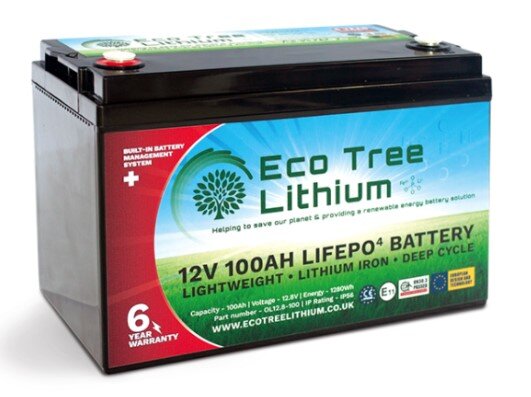
Eco-Worthy 100 Amp Hour LiFePO4 Deep Cycle Battery
 The Eco-Worthy 100 Amp/hour, 12V LiFePO4 long-cycle battery is an ideal replacement for similar-sized lead-acid leisure batteries. It measures 10.2 x 6.6 x 8.2 inches (L x W x H).
The battery management system is integrated within the body of the battery making it easy to use. It is lightweight at 23 pounds (10.4kg) and comes with a ten-year warranty.
The battery can be used for between 3,000 and 5,000 cycles. At that point, 75 to 80 percent of the energy capacity will remain, which should give most users a life span beyond ten years.
Are you ready to upgrade to lithium for your travel trailer?
There are very few reasons not to upgrade your motorhome battery from the standard lead-acid type to lithium. This simple upgrade can resolve many of the limitations in your existing lead-acid batteries.
Although the initial cost might be a concern, it is worth the long-term investment. You will enjoy many more hours of uninterrupted enjoyment and longer battery life without worrying about whether your battery will last.